


Ask any home baker and they will tell you: macarons have a reputation. Of all the pastries out there, this is the one that shows up on baking shows as the final boss challenge. Here is what actually makes them so unforgiving, and why getting it right is worth the trouble.
The Margin for Error Is Tiny
Macaron batter, called macaronage, has to be mixed to an exact consistency: not too thick, not too thin. A few strokes too many or too few and the shells crack, spread flat, or never form the signature ruffled feet.
Humidity and Temperature Change Everything
The same recipe that works perfectly on a dry day can fail completely on a humid one. Egg whites, oven temperature, even the weather outside all affect how the shells bake. It is part of why consistent macarons at scale require real technique, not just a good recipe.
Common Ways Macarons Go Wrong
- Hollow shells: underbaked, or the batter was not rested long enough before baking
- Cracked tops: oven too hot, or no resting period to form a skin
- No feet: batter overmixed, or piped batter was not rested
- Lopsided shells: uneven piping or an oven with hot spots
Why It's Worth the Difficulty
A well-made macaron has a shell that is faintly crisp on the outside and soft and chewy underneath, with a filling that is neither too sweet nor too thin. That contrast in texture is the entire point, and it only happens when every step, from the almond flour sifting to the exact bake time, is dialed in.
How We Do It at Macadons
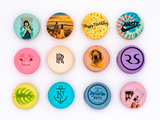
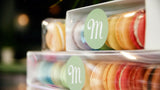
We make more than 10,000 macarons a week across our Renton and Bellevue locations, which means our team has run into, and solved, just about every way a macaron can go wrong. That volume is also what lets us do something most bakeries cannot: print custom logos and photos directly onto the shell, which only works on a shell with the right smooth, stable surface.
Taste the difference for yourself. Shop our macaron flavors or visit us in Renton or Bellevue.